
Relational Activism
Field Notes #1: From Highgate to the Fens — What Happens When Care Meets Systems the Threshold Between Psychotherapy & Activism

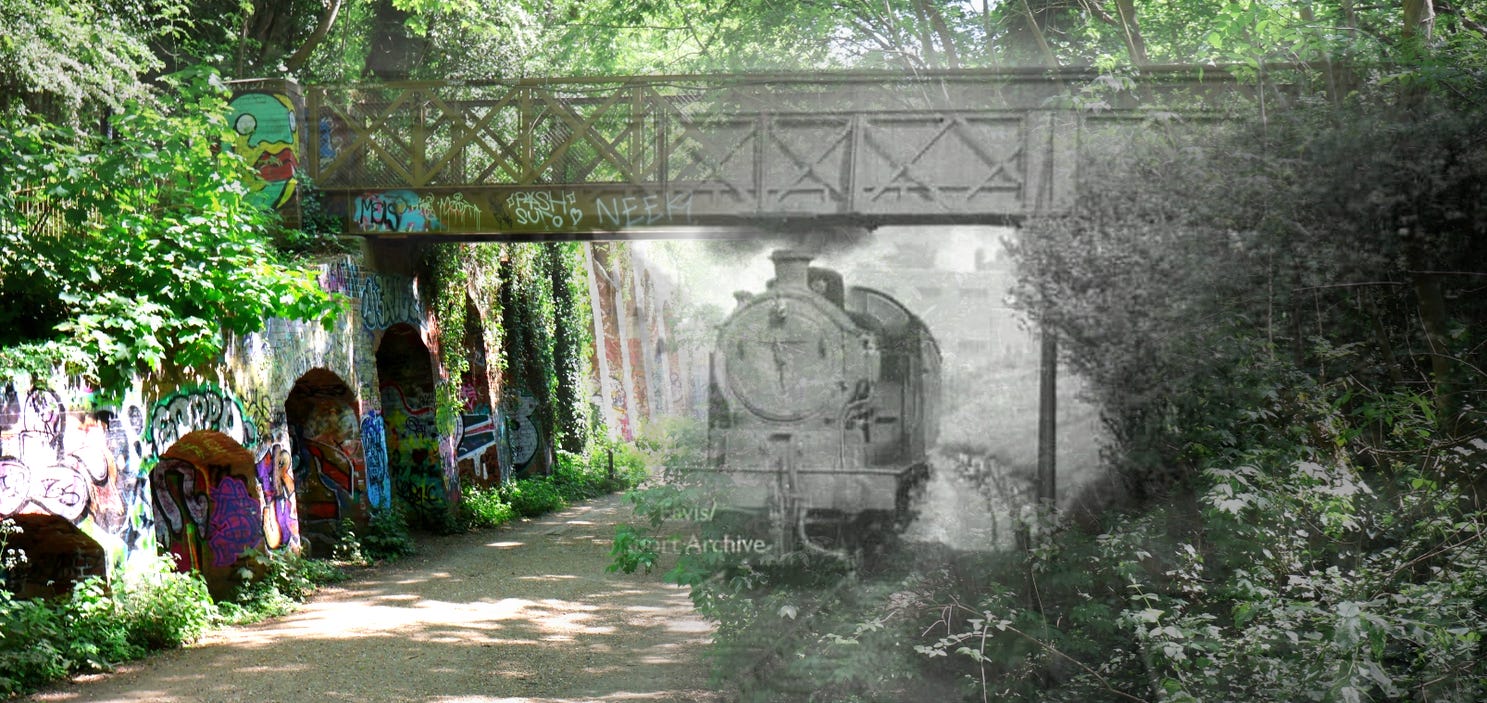
For most of my adult life, I have worked with forms of distress that do not respond well to urgency, trauma, relationship pain, grief and loss.
For over twenty-five years, I have sat with individuals, couples and groups trying to understand what happens when care becomes defence, when closeness hardens, and when people begin protecting the very patterns that keep them apart.
Again and again, I have returned to the same understanding; relationships grow in conditions. Trust grows in conditions. Repair grows in conditions.
For a long time, I thought this belonged mostly inside therapy rooms.
Now I am less sure.
I did not set out to become involved in planning. I did not imagine public life would become part of my work. I certainly did not imagine spending evenings reading planning reports, committee minutes, ecological assessments and legal correspondence.
But something crossed a threshold.
A series of planning applications. A green space. A place with a long history of repeated refusals and dismissed appeals. A place known by those around it not as a site, but as openness, habitat, relief.
And then eventually permission.
Quietly. Administratively. Through process.
I sometimes think the campaign did not begin where I thought it did. Not with legal letters, planning policy, or even the recent approval. Perhaps it began earlier, with the trees. Nineteen of them disappearing from a place in Highgate that had, for decades, offered openness, habitat and relief. I remember witnessing that loss and feeling something shift inside me. Disbelief first. Then grief. Then a deeper kind of rupture: the recognition that a living place could be altered so completely, and still be spoken about as if only paperwork had changed.
As a student, I remember making my first documentary around the battles at Twyford Down.
At the time, I didn’t have language like ecocide. I did not have theories about relational fields or eco-grief or the langauge I have now. I knew that people were living in trees, refusing to leave, trying to protect a landscape from becoming a torn and extracted landscape.
I remember being struck by the seriousness of it. The way people spoke about land as if it mattered. The strange mix of grief, idealism and disbelief.
I thought I had left that part of myself behind.
Maybe I hadn’t.
Then later, standing before the loss of a mature tree removed in broad daylight, couched as a favor, I felt something difficult to explain. The tree was not the whole story. It sat inside something larger and more tangled; water, ownership, planning language, commercial pressure, and the slow conversion of living land into commodity. But the loss was not abstract either. I had known that tree long before I had language for ecology or planning. The willow tree was the visible wound, but the injury was wider.
Not only grief.
Recognition.
Different landscapes. Different authorities. Different language. And yet underneath them I kept meeting the same question: what happens when living places become easier to redraw than to relate to?
What unsettled me was not only the loss. It was the atmosphere afterwards. No one saying; stop. Nothing explicit. Something quieter. The subtle feeling that once something has happened, the reasonable response is acceptance. That concern should become private. That grief should not interrupt procedure. That asking questions for too long becomes its own kind of problem.
I realised that part of what I was resisting was not only ecological loss. It was the expectation that care should remain emotional and never become structural; that love of place should stay personal and not become public.
I don’t think I understood eco-grief until it had an address. Until it was not “the environment” in the abstract, but a tree, a path, a boundary, a place I knew.
From Highgate to the Fens, my understanding began changing. I had spent years helping people understand that relationships deteriorate when reciprocity disappears. I had not realised landscapes could reveal the same lesson.
Somewhere along the way, places I knew became shapes on drawings. And once that happened, it seemed easier for people to stop feeling them.
People do not exist in isolation. Places do not either. Communities do not either. All living systems depend on conditions. And when those conditions become too thin, too procedural, too fragmented, too defended, something begins to disappear.
Not dramatically.
Quietly.
People stop believing participation matters. They stop expecting to be heard. They stop showing up. And those who remain are left carrying not only the campaign, but the grief of the field around it.
At the beginning there were more of us; conversations, objections, shared outrage, people opening homes, people believing things could still be influenced. Then time passed. People returned to work. Health intervened. Life called them back.
Of course it did.
This is what life does.
The campaigns continue in different forms. And much of the work now happens quietly; reading, writing, learning, following one thread after another, trying to understand how decisions are made and where relationship disappears inside process.
Sometimes I feel clear. Sometimes exhausted. Sometimes I wonder whether I am defending particular places, or something older, a deeper understanding that land is not simply material.
It is relationship.
There is a kind of law older than policy. Not legal law. Not something enforceable. Something more ecological; reciprocity, limits, stewardship, continuity, care.
When those conditions break, something in the body knows.
This is where my therapeutic work and public life have begun to meet. Because I know something about dissociation. I know what happens when experience becomes separated from language. I know how systems protect themselves.
Families do this. Organisations do this. Cultures do this. Institutions do this too.
One person processes. Another signs off. Another explains. Each part can appear reasonable. And yet somewhere between the parts, something living disappears.
I am not sure I chose activism. I think I followed care past the point where it was socially convenient.
Perhaps that is where this new thread begins. Not in certainty. Not in strategy. But in the uncomfortable place where love of place becomes public, and grief refuses to stay private.
I do not know how this story ends. The questions remain. The work continues.
But something has changed.
My practice. My writing. My understanding of relationships. All of it feels less abstract now, less contained, more exposed to weather.
I used to think relational work was mostly about helping people find their way back to one another. Now I wonder whether it is also about helping us find our way back into relationship with places, systems, grief, limits, and what is alive.
Perhaps this is where I begin again. Although perhaps that isn’t entirely true.
Not a campaign update. Not a legal argument. A field note.
From the place where care meets systems.
From the place where grief becomes knowledge.
From the place where the question is no longer simply whether one development should or should not go ahead, but whether we can remember how to relate to what sustains us.
And whether, from Highgate to the Fens, we can begin to create conditions in which care survives.
Aisha Ali is a UKAHPP, UKCP-registered integrative humanistic consultant psychotherapist, couples therapist and clinical supervisor with over 25 years’ experience. She is writing a book exploring how relationships grow in conditions, not isolation, and how our relational climate shapes everything from intimate partnerships to our capacity to care for the living world. Her current writing follows the meeting point between therapy, ecology, public life and the difficult work of staying in relationship with what is being lost.
If this resonates
If you would like to follow this work, receive future field notes, or learn more about the places and questions that sit behind this writing:
Campaign updates Stop Developer-Led Abuse – From Highgate to the Fens
You can also subscribe here for future Field Notes as this work unfolds.